
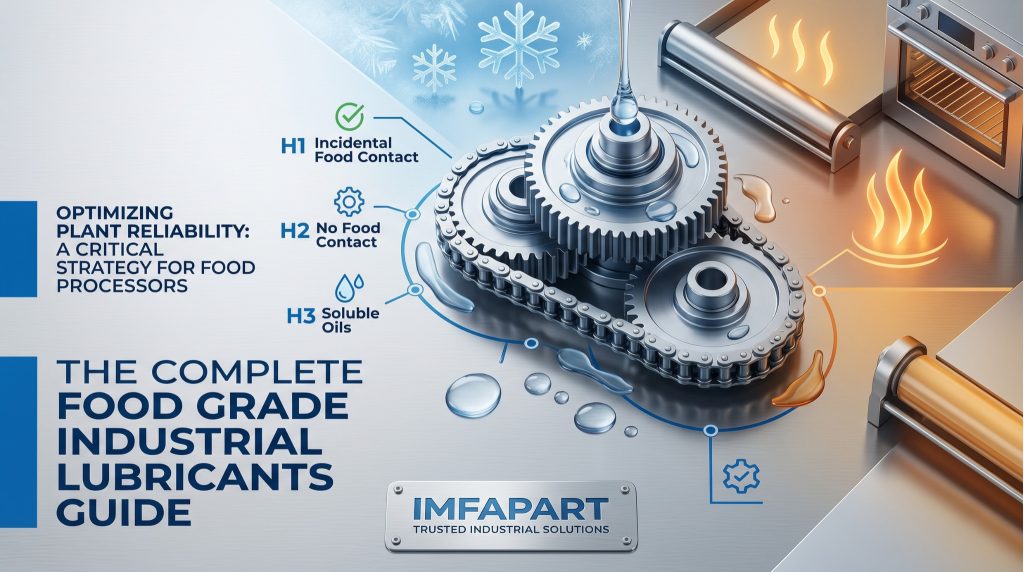
In the food and beverage processing industry, operational efficiency must always coexist with uncompromising safety standards. Implementing high-quality food grade industrial lubricants is no longer just a regulatory checkbox; it is a critical strategy to protect consumer health, safeguard your brand reputation, and maximize machinery lifespan.
Food manufacturing plants operate under some of the most grueling environments in the industrial sector. From extreme freezing temperatures in meat packaging facilities to intense heat in commercial baking ovens, machinery faces severe stress. However, unlike standard heavy industries, the food sector faces the constant threat of chemical contamination, making specialized lubrication absolute mandatory.
The Critical Need for Food Grade Industrial Lubricants
The primary risk in any food-related production line is accidental product contact. Standard lubricants contain toxic compounds, heavy metals, and polymers that can cause severe health hazards if they contaminate a batch. To prevent catastrophic recalls and regulatory penalties, certified food grade industrial lubricants must be deployed across all critical control points (CCPs) of your facility.
These advanced formulations are scientifically engineered using non-toxic base stocks and food-safe additives. They provide excellent anti-wear properties, oxidation resistance, and rust protection, ensuring your equipment performs at peak efficiency without introducing biochemical risks to the manufacturing chain.
Understanding Safety Categories (H1, H2, and H3):
✔️ H1 Lubricants (Incidental Food Contact)
These are used on machinery where there is a potential, unforeseen exposure to the food product. If a leak or overspray occurs, H1 fluids are deemed safe up to very strict microscopic thresholds (10 parts per million), preventing major health crises.
⚙️ H2 Lubricants (No Food Contact)
Designed for equipment and machinery components located below the production line or completely isolated where there is absolutely no possibility of contacting food, such as closed gearboxes or base pumps.
💧 H3 Lubricants (Soluble Oils)
Typically applied to clean and prevent rust on hooks, trolley brackets, cutters, and similar metallic edges before the equipment comes into direct, active contact with food products.
Debunking the Performance Myth in Modern Operations
Years ago, some maintenance engineers believed that choosing certified food-safe oils meant sacrificing mechanical performance. Early iterations struggled with high loads or intense moisture washdowns. Fortunately, technology has evolved rapidly. Today, high-performance food grade industrial lubricants equal or exceed the thermal stability, load-carrying capacity, and shear resistance of traditional industrial mineral oils.
Furthermore, these lubricants are highly resistant to water washout, steam, and acidic sanitizing chemicals used during intensive daily washdown cycles. This ensures that the lubricating film remains intact on your bearings, chains, and air compressors, significantly lowering the risk of unexpected component failure and expensive plant downtime.
Optimize Your Plant Reliability with IMFAPART
At IMFAPART, we understand that maintaining a clean, compliant, and highly efficient manufacturing environment requires specialized solutions. Our industrial catalog features premium food grade industrial lubricants engineered to protect your critical machinery while adhering strictly to international safety regulations. (Keyword Mention 5)
Investing in premium, certified lubrication is a proactive business decision. By combining proper application methods with high-quality food grade industrial lubricants, your company achieves a dual victory: ensuring complete consumer safety and optimizing the operational life of your technical assets. (Keyword Mention 6)
Want to know more about industrial filtration, advanced lubrication solutions, and preventive maintenance tips? Connect with us and follow our updates on social media!